As a titanium sheet supplier who has worked with this metal for over a decade, I’ve lost count of how many times engineers and project managers ask me, “Why choose titanium over steel or aluminum for high-temperature, long-load applications?” The answer, more often than not, ties back to a property that’s critical for parts that have to hold up under constant stress over years—even decades: creep resistance. If you’re new to working with titanium sheets, or if you’ve been using other metals and are curious about how titanium stacks up, this post breaks down what creep resistance actually means for titanium sheets, how it performs in real-world conditions, and why it might be the missing piece for your next project. Titanium Sheet

First, let’s get creep straight. Creep is the slow, gradual deformation of a material when it’s exposed to a constant load and a temperature below its melting point. Think of a turbine blade in a jet engine, a heat exchanger in a power plant, or a structural component in a chemical processing facility. Those parts don’t just carry stress once—they carry it every single day, often at temperatures high enough that steel would start to stretch and warp over time. For a material like titanium, which has a melting point of around 1668°C (3034°F), creep resistance isn’t just a nice-to-have; it’s what keeps those parts from failing unexpectedly.
A lot of people assume all titanium is the same, but that’s not true. The creep resistance of titanium sheets depends heavily on two factors: the titanium alloy and the manufacturing process used to make the sheets. Pure titanium, for example, has good creep resistance at lower temperatures, but it starts to soften significantly above 300°C (572°F). That’s why most high-stress, high-temperature applications use titanium alloys—like Ti-6Al-4V, the workhorse of the aerospace and medical industries, or Ti-6Al-2Sn-4Zr-2Mo (often called Ti-6242), which is specifically engineered for higher heat. Ti-6242, in fact, has 2-3 times better creep resistance than pure titanium at temperatures between 400°C and 500°C (752°F to 932°F), because the added elements (tin, zirconium, molybdenum) form stable intermetallic particles that block dislocations—those tiny, atomic-scale movements that cause deformation over time.
The manufacturing process also matters. When we roll titanium sheets, the grain size, texture, and residual stress all play a role in how the material behaves under load. For example, cold-rolled titanium sheets have a tighter, more uniform grain structure than hot-rolled, which can improve creep resistance because the grains are less likely to slide past each other. But if you anneal cold-rolled sheets at too high a temperature, you can coarsen the grains, which actually makes creep worse—bigger grains mean more space for movement. That’s why at our shop, we work closely with clients to tailor the manufacturing process: if you need sheets for a heat exchanger that runs at 350°C, we might recommend a medium-rolled Ti-6Al-4V sheet with a fine grain structure, whereas a turbine component running at 450°C would need Ti-6242 with a specific annealing schedule to lock in that creep-resistant structure.
Now, let’s put numbers to this, because that’s what engineers care about. Creep resistance is usually measured as the minimum stress required to cause a certain amount of deformation over a set time—for example, “1% creep strain over 10,000 hours” at a given temperature. For pure titanium, at 300°C, that stress is roughly 150 MPa. At 400°C, it drops to around 50 MPa—meaning if you apply a load higher than 50 MPa at 400°C, the sheet will stretch 1% in 10,000 hours. Compare that to Ti-6242 at 400°C: the stress required for 1% creep over 10,000 hours is nearly 200 MPa. That’s a huge difference—enough to cut component weight by 30% or more, because you can use a thinner sheet with a smaller cross-sectional area, and it won’t deform under load.
What about when temperature gets even higher? Above 500°C, even the best titanium alloys start to lose their edge. That’s when superalloys like Inconel take over—but titanium has a key advantage in that range too: it’s much lighter. For applications where weight is a critical factor (like aerospace, where every extra kilogram adds fuel cost), the tradeoff between slightly lower creep resistance at 500°C versus 50% lower weight makes titanium the obvious choice. We supply a lot of titanium sheets to jet engine manufacturers who use Ti-6242 for compressor blades—parts that run at 450°C, and need to last 20+ years with no more than 0.1% creep deformation.
I’ve seen first-hand what happens when you overlook creep resistance. A few years back, a customer came to us with a problem: they’d been using stainless steel sheets for a chemical processing heat exchanger, and after 18 months, the sheets had warped so much that the seals failed, leading to a 2-week shutdown and hundreds of thousands of dollars in lost production. We recommended switching to Ti-6Al-4V sheets, with a specific cold-rolled grain structure. Three years later, they reached out to tell us the Ti sheets had zero visible deformation, and their maintenance costs had dropped by 75%. That’s the value of understanding creep resistance: it’s not just a material property—it’s a cost saver.
But creep resistance isn’t the only factor to consider with titanium sheets. Corrosion resistance, fatigue strength, and formability all come into play, depending on your application. For example, if you’re making a medical implant, you don’t just need creep resistance—you need biocompatibility, which pure titanium or Ti-6Al-4V delivers. If you’re making a marine component, titanium’s resistance to saltwater corrosion is a big plus, which complements its creep resistance when parts are exposed to constant load in warm seawater. That’s why we don’t just sell sheets; we work with clients to match the alloy and manufacturing process to their exact operating conditions.
Another common misconception: creep is only a problem at high temperatures. That’s not true. For parts that carry extremely high loads, even room temperature creep can be an issue. For example, structural components in deep-sea oil rigs, where titanium sheets are used for their strength-to-weight ratio, are under constant hydrostatic pressure. Over 10 years, even at 20°C, a titanium sheet that’s not properly processed might deform slightly, which can compromise the structural integrity of the rig. We supply sheets for these applications with a isostatically pressed grain structure, which minimizes room-temperature creep by locking in atomic arrangement so deformation is negligible even after 100,000 hours.
So, how do you choose the right titanium sheet for your creep needs? Start with three questions: what’s the maximum operating temperature of your part? What’s the constant load (stress) it will carry? And what’s the design life (how many years it needs to last)? If your answers are below 300°C, pure titanium or standard Ti-6Al-4V will work. If they’re between 300°C and 500°C, go for a high-temperature alloy like Ti-6242 or Ti-10V-2Fe-3Al, which is another alloy we supply for high-stress aerospace applications. Above 500°C, you’ll need to pair titanium with a protective coating, but even then, the base titanium sheet’s creep resistance will still outperform lighter materials.
As a supplier, we’ve spent years perfecting the balance between creep resistance and other properties of titanium sheets. We test every batch of sheets ourselves, using creep test machines that simulate real operating conditions: constant load, controlled temperature, and long-duration testing (up to 50,000 hours). That way, we can guarantee that the sheet you receive will perform as advertised, not just on paper, but in the field. We also offer custom cutting and forming services, because a sheet that’s mill-rolled might not fit your exact component—and even the best alloy won’t help if the forming process introduces residual stress that leads to premature creep.
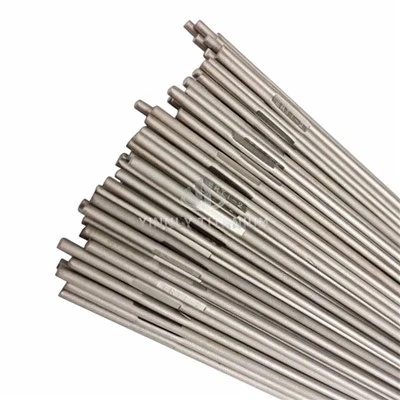
Titanium Wire for Eyeglasses If you’re tired of dealing with materials that fail from creep, or if you’re designing a new part and want to avoid those costly shutdowns, let’s talk. We can send you sample sheets, walk through your operating conditions, and recommend the exact titanium sheet that will give you the creep resistance you need, without wasting material or budget. Whether you’re in aerospace, chemical processing, marine, or any industry where long-load, high-temperature parts matter, titanium sheets with proven creep resistance are the solution. Don’t let creep derail your project—reach out to us, and we’ll help you pick the right material for the job.
References
- Leyens, C., & Peters, M. (Eds.). (2003). Titanium and Titanium Alloys: Fundamentals and Applications. Wiley-VCH.
- Donachie, M. J. (2000). Titanium: A Technical Guide (2nd ed.). ASM International.
- Frost, H. J., & Ashby, M. F. (1982). Deformation-Mechanism Maps: The Plasticity and Creep of Metals and Ceramics. Pergamon Press.
- Metals Handbook. (1998). Volume 2: Properties and Selection: Nonferrous Alloys and Special-Purpose Materials. ASM International.
Baoji Yinnly Titanium Co., Ltd.
Baoji Yinnly Titanium Co., Ltd. is one of the most professional titanium sheet manufacturers and suppliers in China, featured by quality products and good service. Please rest assured to buy bulk titanium sheet in stock here and get quotation from our factory. Customized orders are welcome.
Address: Unit 902, Building 1, Creative Building, No. 195, Gaoxin Avenue, High-tech Zone, Baoji City, Shaanxi Province
E-mail: anna@yinnlyti.com
WebSite: https://www.yinnlyti.com/
