In recent years, collaborative robots, also known as cobots, have revolutionized the manufacturing and industrial sectors. These robots are designed to work alongside human workers, enhancing productivity, efficiency, and safety. As a leading supplier of robot core components, I have witnessed firsthand the importance of ensuring safety in collaborative robots. In this blog, I will explore how our robot core components play a crucial role in guaranteeing the safety of both human operators and the robots themselves. Robot Core Component
Understanding the Basics of Collaborative Robots
Collaborative robots are designed to operate in close proximity to humans, performing tasks such as assembly, pick-and-place operations, and quality control. Unlike traditional industrial robots, which are typically confined to cages or safety barriers, cobots are equipped with advanced sensors and safety features that allow them to interact safely with human workers. This interaction can range from simple tasks, such as passing objects between a human and a robot, to more complex operations, where the robot and human work together to complete a task.
The Role of Robot Core Components in Safety
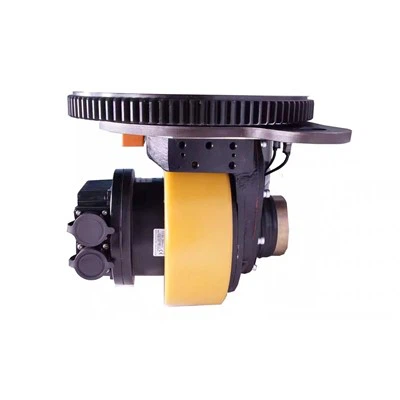
Robot core components are the building blocks of any robotic system. They include motors, controllers, sensors, and actuators, all of which work together to enable the robot to perform its intended tasks. In the context of collaborative robots, these components are particularly important for ensuring safety.
Sensors: The Eyes and Ears of the Robot
Sensors are perhaps the most critical components when it comes to safety in collaborative robots. They provide the robot with information about its environment, allowing it to detect the presence of humans and other objects. There are several types of sensors used in cobots, each with its own specific function.
- Force Sensors: Force sensors are used to measure the amount of force exerted by the robot. This is important for preventing the robot from applying too much force when interacting with humans or objects. For example, if a cobot is performing a delicate assembly task, the force sensor can detect if the robot is applying too much pressure and adjust its movements accordingly.
- Proximity Sensors: Proximity sensors are used to detect the presence of objects or humans in the vicinity of the robot. These sensors can be used to trigger safety measures, such as stopping the robot’s movement, if a human gets too close. There are different types of proximity sensors, including infrared sensors, ultrasonic sensors, and laser scanners, each with its own advantages and limitations.
- Vision Sensors: Vision sensors, such as cameras, provide the robot with visual information about its environment. This can be used for tasks such as object recognition, navigation, and collision avoidance. For example, a vision sensor can detect if a human is in the path of the robot and send a signal to the controller to stop the robot’s movement.
Controllers: The Brain of the Robot
The controller is responsible for processing the information received from the sensors and sending commands to the motors and actuators to control the robot’s movements. In a collaborative robot, the controller plays a crucial role in ensuring safety by implementing safety algorithms and protocols.
- Safety Algorithms: Safety algorithms are designed to analyze the data received from the sensors and make decisions based on predefined safety rules. For example, if a proximity sensor detects that a human is approaching the robot, the safety algorithm can calculate the distance and speed of the human and determine if the robot needs to stop or slow down.
- Safety Protocols: Safety protocols define the procedures and actions that the robot should take in case of a safety event. For example, if a force sensor detects an abnormal force, the safety protocol can specify that the robot should immediately stop its movement and send an alarm signal.
Motors and Actuators: The Muscles of the Robot
Motors and actuators are responsible for converting electrical energy into mechanical motion, allowing the robot to move its joints and perform tasks. In a collaborative robot, the motors and actuators need to be carefully selected and controlled to ensure safe and precise movements.
- Torque Limiting: Torque limiting is a safety feature that restricts the amount of torque that the motor can apply. This is important for preventing the robot from causing injury to humans by applying excessive force. For example, if a cobot is designed to lift a certain weight, the torque limit can be set to ensure that the motor does not apply more force than necessary.
- Soft Stop: A soft stop is a safety feature that allows the robot to gradually slow down and stop its movement in case of a safety event. This is in contrast to a hard stop, which can cause the robot to suddenly stop, potentially causing damage to the robot or the objects it is handling.
Our Approach to Safety in Robot Core Components
As a supplier of robot core components, we take safety very seriously. We have implemented a comprehensive quality control system to ensure that all our components meet the highest safety standards.
Research and Development
Our research and development team is constantly working on developing new and improved safety features for our robot core components. We invest heavily in research to stay at the forefront of technological advancements in the field of robotics. For example, we are currently working on developing advanced sensors that can detect the presence of humans with greater accuracy and reliability.
Testing and Certification
Before our components are released to the market, they undergo rigorous testing to ensure that they meet all the relevant safety standards. We also obtain certification from independent testing organizations to demonstrate the safety and reliability of our products. For example, our motors and controllers are certified to comply with the ISO 10218 and ISO/TS 15066 standards, which are international standards for the safety of industrial robots and collaborative robots.
Training and Support
We provide comprehensive training and support to our customers to ensure that they can use our components safely and effectively. Our training programs cover topics such as installation, operation, maintenance, and troubleshooting of our robot core components. We also offer technical support to our customers to help them resolve any issues they may encounter with our products.
Conclusion

Safety is of utmost importance in collaborative robots. Our robot core components, including sensors, controllers, motors, and actuators, play a crucial role in ensuring the safety of both human operators and the robots themselves. By investing in research and development, testing and certification, and training and support, we are committed to providing our customers with the highest quality and safest robot core components.
Kids Companion Robot If you are interested in learning more about our robot core components and how they can ensure safety in your collaborative robot applications, please feel free to contact us for a procurement discussion. We look forward to working with you to enhance the safety and efficiency of your robotic systems.
References
- ISO 10218-1:2011, Robots and robotic devices — Safety requirements for industrial robots — Part 1: Robot.
- ISO 10218-2:2011, Robots and robotic devices — Safety requirements for industrial robots — Part 2: Robot systems and integration.
- ISO/TS 15066:2016, Robots and robotic devices — Collaborative robots.
Hangzhou Janz Intelligent Technology Co., Ltd.
As one of the most professional robot core component manufacturers and suppliers in China, we offer a wide range of products with superior quality. Please feel free to buy advanced robot core component at competitive price from our factory. Contact us for quotation.
Address: Room 240, 2nd Floor, 289-16, Creative Road, Yinhu Street, Fuyang District, Hangzhou City, Zhejiang Province
E-mail: amy@hzjanz.com
WebSite: https://www.simplexrobots.com/
