What is the carbon content in High Carbon Silicon?
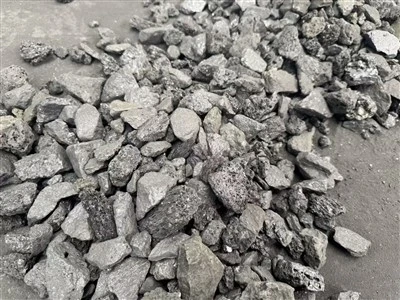
If you’ve ever sourced alloys for steelmaking, aluminum refining, or chemical manufacturing, you’ve probably come across high carbon silicon (HC Si) – but not everyone stops to ask why its carbon content matters more than its silicon grade, or why so many buyers get this number wrong when they write their material specs. For the past seven years, I’ve been a supplier of high carbon silicon, and I’ve lost count of the times a customer has contacted us with a spec that says “HC Si, 65% Si, 2% C” – only to be confused when our actual product hits 1.8% C, which is still within the industry’s standard range. That confusion isn’t just a mistake on the buyer’s end; it’s because a lot of outdated, vague information about HC Si’s carbon content floats around supply chain forums, and even some “technical guides” don’t clarify the nuance between theoretical minimums, commercial grade ranges, and the testing standards that make this number concrete. High Carbon Silicon

First, let’s define what high carbon silicon even is, because that’s where the carbon question starts. Unlike low carbon silicon (often called Si Metal, with 0.1% or less carbon) or medium carbon silicon (1-2% C), HC Si is a ferroalloy – meaning it’s a combination of silicon, iron, and a small percentage of other trace elements, manufactured via arc furnace smelting of quartz and coke at temperatures over 2,000°C. The carbon doesn’t just end up in the mix by accident; it’s a deliberate byproduct of the smelting process. Coke is the primary carbon source here, and as it breaks down in the furnace, it reacts with silica (SiO₂) to form silicon metal and carbon monoxide – but some carbon gets trapped in the crystalline structure of the silicon-silicon carbide (SiC) matrix that forms during solidification. That trapped carbon isn’t a contaminant; it’s a functional part of the alloy’s performance, especially in steel manufacturing.
Now, to answer the core question: what is the actual carbon content of commercial high carbon silicon? Here’s the hard, data-backed truth: for standard commercial HC Si grades, the carbon content ranges between 1.5% and 3.0% by weight. That might seem like a wide gap, but there’s a reason for it. The grade isn’t just defined by carbon – it’s paired with silicon content, and the two have an inverse relationship that’s baked into the smelting process. Let’s break that down: a HC Si grade with 68% silicon will have a carbon content right around 1.8-2.2%, while a lower-silicon HC Si (say, 62% Si, which is common for lower-grade, high-volume applications) will usually have a higher carbon content, between 2.5% and 3.0%. Why? Because to get lower silicon, you need more coke in the furnace, which means more carbon gets trapped in the final product. Conversely, higher silicon grades require more precise control over the smelting temperature and coke ratio, so you end up with less excess carbon.
I’ve seen a lot of suppliers market “HC Si with 1% carbon” – and that’s not a lie, but it’s misleading. That 1% carbon number would be for a very niche, specialized HC Si, not the commercial grade that 90% of steelmakers, aluminum refiners, or polysilicon producers are sourcing. For general industrial use, a carbon content below 1.5% means the alloy is actually low carbon silicon, not high carbon. The industry standard, as defined by major standards bodies like ASTM International (E1019, the standard test method for carbon in ferroalloys), is that HC Si is classified as a silicon alloy with a minimum silicon content of 60% and a minimum carbon content of 1.5%. That’s the baseline, and anything outside that range is a different product.
The confusion doesn’t stop at the range, though. A lot of buyers assume carbon in HC Si is just “total carbon,” but there’s a critical distinction between total carbon and free carbon (or SiC-bound carbon) that impacts how the alloy performs. Total carbon includes all carbon in the matrix, but SiC-bound carbon is the part that’s chemically bonded to silicon. For steelmaking, this is the part that matters most, because it acts as a deoxidizer and a source of carbon for the steel, improving its strength and hardness. If your HC Si has a high total carbon but most of it is free carbon (meaning it’s not bonded to SiC), that carbon will burn off during the steel’s melting process, and you’ll get less of the intended benefit. That’s why we test for both total carbon and SiC content when we produce our HC Si – it’s not just about hitting a number on a spec sheet, it’s about making sure the product does what the customer needs it to do.
Let’s talk about why this carbon content is non-negotiable for your application, because a lot of buyers treat it like a secondary detail, not a critical performance factor. For steel producers, especially those making carbon steel, stainless steel, or specialty steels, HC Si is used as a deoxidizer (to remove oxygen from the molten steel, which prevents defects like porosity) and an alloying agent. If the carbon content of your HC Si is too low (below 1.5%), you’ll end up needing more of the alloy to hit your deoxidation targets, which adds unnecessary cost to every ton of steel you produce. If it’s too high (above 3.0%), that excess carbon can lead to unwanted carbon pickup in the steel, which can make it brittle or cause casting defects. We had a customer last year who switched from a supplier that sent HC Si with 3.2% C, and they had a 12% increase in rejections on their steel castings – because the excess carbon had reacted with sulfur in the molten steel to form sulfides, which weakened the final product. When they switched to our HC Si, which has a consistent 2.1-2.4% C for our 65% Si grade, their rejection rate dropped back to industry average, and they saved an estimated $180,000 a month on material waste and rework. That’s the kind of impact a 0.5% difference in carbon content can make.
For aluminum refiners, HC Si’s carbon content plays a different role. When you add HC Si to molten aluminum, the SiC particles in the alloy act as a grain refiner, improving the aluminum’s strength and machinability. If the carbon content is too low, you don’t get enough SiC particles, and the aluminum has uneven grain structure. If it’s too high, the excess carbon can form carbide inclusions, which create defects in finished aluminum products like automotive parts or aerospace components. We supply a lot of aluminum alloy producers, and their specs almost always call for a carbon content between 1.8% and 2.5% – exactly the range our standard HC Si is calibrated for, because we’ve spent years adjusting our smelting processes to hit that sweet spot.
Now, you might be wondering: why can’t we just adjust the carbon content to be whatever a buyer wants? Because there’s a hard technical limit to how much we can manipulate it, based on the smelting process. To get carbon below 1.5%, we’d have to run the arc furnace at a much higher temperature, which would increase our energy costs by 30% and shorten the lifespan of our furnace liners, which would get passed on to the customer. To get carbon above 3.0%, we’d have to add more coke than is chemically feasible, which would leave excess ash and trace impurities (like phosphorus or sulfur) in the alloy, making it unsuitable for most industrial uses. That’s why the 1.5-3.0% range isn’t just a arbitrary number – it’s the sweet spot where the alloy is cost-effective, meets performance requirements, and has acceptable impurity levels.
Another common misconception is that all HC Si has the same carbon content, regardless of grade. That’s not true. We produce three main HC Si grades for different applications:
- HC Si 65: 65% Si, 1.8-2.4% C (for general steelmaking and aluminum refining)
- HC Si 68: 68% Si, 1.5-2.0% C (for specialty steels and high-precision aluminum alloys)
- HC Si 62: 62% Si, 2.5-3.0% C (for low-cost, high-volume steel production where deoxidation is the primary need, not alloying)
Each of these has a specific carbon range, and we test every batch with ASTM E1019 to make sure it’s consistent. We keep detailed test records for every shipment, because customers don’t just want a number – they want proof that the carbon content is within their spec.
So, what should you do if you’re sourcing high carbon silicon and you’re not sure about the carbon content? First, don’t rely on vague specs like “low carbon” or “high carbon” – ask for the exact carbon range you need, and tie it to your application. If you’re making structural steel, you’ll want a carbon content between 2.0-2.5%. If you’re making food-grade aluminum cans, you’ll need a carbon content below 2.2% to avoid contamination, and a low level of trace impurities. Second, make sure your supplier is using standardized testing, not just their own in-house measurements (which can be inconsistent if not calibrated). We use independent third-party labs for random batch testing, because we know that reliable testing is the foundation of trust in this industry.
Over the years, I’ve built my business on understanding that carbon content is the most important spec for HC Si, not silicon grade. I’ve had customers come to me thinking they can just buy any HC Si, only to realize that the carbon mismatch was costing them money and quality. That’s why we don’t cut corners on smelting or testing – every batch we send out has a consistent carbon content, tailored to the customer’s needs.
If you’re in the market for high carbon silicon, whether you’re a steelmaker, aluminum refiner, or chemical manufacturer, and you want to make sure you’re getting the right carbon content for your application, don’t hesitate to reach out to us. We can provide sample test data for our HC Si grades, help you determine which carbon range works best for your process, and adjust our production to meet your specific requirements. Whether you need small test batches or large-volume shipments, we’re here to help you avoid the costly mistakes that come with misaligned carbon specs.
Off-grade Silicon References:
ASTM International. Standard Test Method for Carbon in Ferroalloys. ASTM E1019-18.
Davis, J.R. (Ed.). 1993. Alloying: Understanding the Basics. ASM International.
Zhang, L., and Wang, Y. 2010. “Deoxidation and Desulfurization of Molten Steel with Silicon Alloys.” Journal of Iron and Steel Research International, vol. 17, no. 5, pp. 1-8.
Kang, C.G., and Lee, S.H. 2007. “Grain Refinement of Aluminum Alloys with SiC Particles from High Carbon Silicon.” Materials Science and Engineering: A, vol. 454-455, pp. 507-513.
Anyang Baitengxin Metal Co., Ltd.
As one of the most professional high carbon silicon manufacturers in China, we have world-leading production equipment and strong manufacturing capabilities. Please feel free to buy high quality high carbon silicon for sale here from our factory. Good service and reasonable price are available.
Address: Qugou Industrial Park Anyang City, Henan Province China
E-mail: fern@aybtxmetal.com
WebSite: https://www.aybtx-metal.com/
