As a supplier of broken twill fabrics, I’m often asked about the differences between broken twill and houndstooth. These two patterns are distinct in their weave structures, visual appearances, historical significances, and application scopes. In this blog, I’ll delve into these differences to provide a comprehensive understanding for those interested in these unique textile patterns. Broken Twill
Weave Structure
The defining characteristic of a fabric lies in its weave structure, and broken twill and houndstooth are no exceptions.
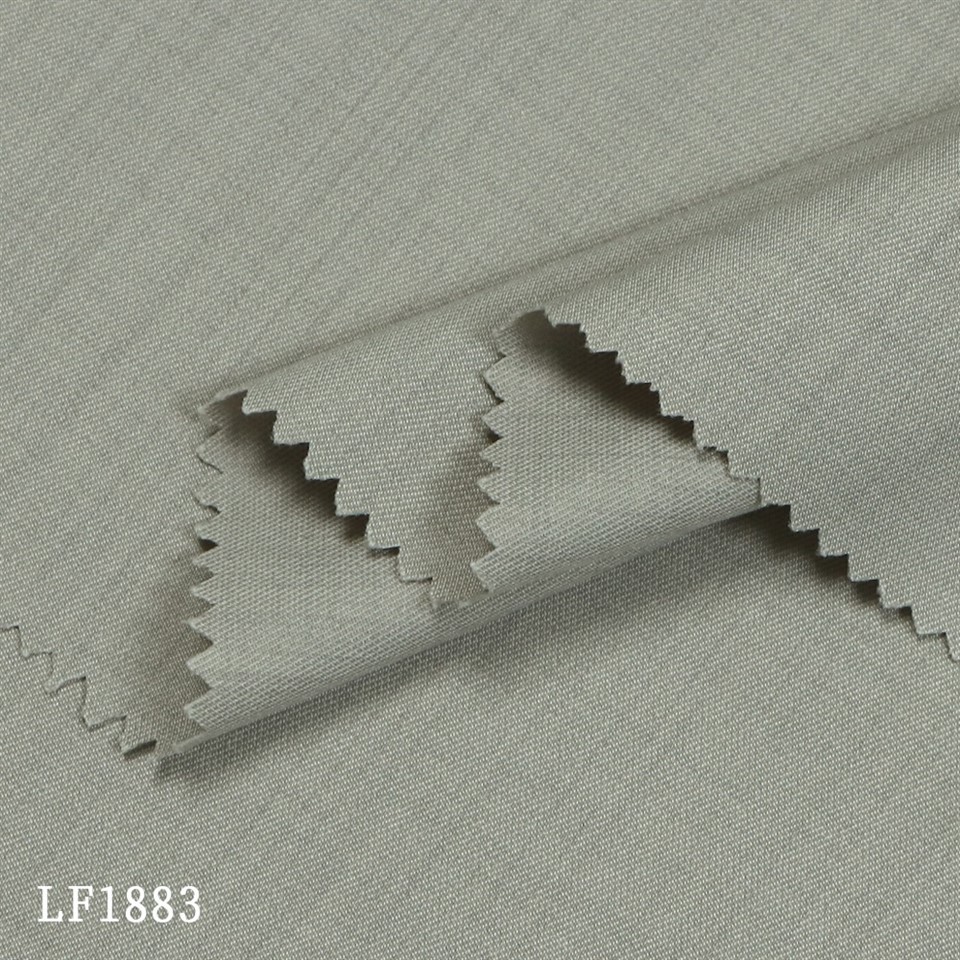
Broken twill is a variation of the basic twill weave. In a standard twill, the diagonal lines created by the interlacing of warp and weft yarns are continuous. However, in broken twill, these diagonal lines are interrupted or "broken" at regular intervals. This interruption can be achieved in various ways, such as by reversing the direction of the twill line or by introducing a different sequence of yarn interlacing. The result is a more complex and textured appearance compared to the simple, continuous diagonal of a regular twill.
On the other hand, houndstooth is a more complex geometric pattern. It is formed by a combination of four different twill weaves, which are arranged in a repeating pattern. The classic houndstooth pattern consists of a series of jagged, four-pointed shapes that resemble the teeth of a dog, hence the name. The pattern is created by alternating the direction of the twill weaves in a specific sequence, which results in a distinct and recognizable checkerboard-like appearance.
The difference in weave structure between broken twill and houndstooth is not just a matter of aesthetics. It also affects the physical properties of the fabric. For example, broken twill fabrics tend to be more flexible and drape better than houndstooth fabrics, which can be stiffer and more structured due to their more complex weave.
Visual Appearance
The visual appearance of broken twill and houndstooth is perhaps the most obvious difference between the two patterns.
Broken twill has a more subtle and understated look. The broken diagonal lines create a sense of movement and texture, but the pattern is not as bold or eye-catching as houndstooth. Broken twill fabrics can come in a wide range of colors and color combinations, but they often have a more muted or earthy color palette. This makes broken twill suitable for a variety of applications, from casual wear to more formal settings.
Houndstooth, on the other hand, is a very bold and distinctive pattern. The large, geometric shapes and high-contrast color combinations make it stand out. Houndstooth is often associated with a more classic and sophisticated style, and it is commonly used in men’s and women’s suiting, as well as in outerwear. The pattern can be quite striking, especially when used in bold colors such as black and white or brown and cream.
In addition to the overall appearance, the scale of the pattern can also vary between broken twill and houndstooth. Broken twill patterns can be relatively small and fine, or they can be larger and more pronounced. Houndstooth patterns, on the other hand, typically have a more consistent scale, with the classic four-pointed shapes being of a similar size throughout the fabric.
Historical Significance
Both broken twill and houndstooth have rich historical backgrounds.
Broken twill has been around for centuries and has been used in a variety of cultures and applications. It was commonly used in traditional textile production, especially in regions where twill weaves were prevalent. In the industrial era, broken twill became popular in the production of workwear and casual clothing due to its durability and flexibility. Over time, it has also found its way into high-fashion garments, as designers appreciate its unique texture and understated elegance.
Houndstooth has a more specific and well-known history. It originated in Scotland in the 18th century and was initially used in traditional Scottish tweeds. The pattern was originally made from natural wool fibers and was used primarily for outdoor clothing, such as hunting jackets and trousers. Over time, houndstooth became more popular in mainstream fashion and was adopted by designers around the world. It has become a classic pattern that is often associated with British style and sophistication.
The historical significance of these patterns has influenced their popularity and perception in modern fashion. Broken twill is seen as a more versatile and timeless pattern, suitable for a wide range of styles and occasions. Houndstooth, on the other hand, is often associated with a more traditional and formal style, although it has also been updated and reinterpreted in more contemporary designs.
Application Scopes
The differences in weave structure, visual appearance, and historical significance also lead to different application scopes for broken twill and houndstooth.
Broken twill fabrics are very versatile and can be used in a wide variety of applications. They are commonly used in the production of shirts, blouses, dresses, and skirts. The flexibility and drape of broken twill make it suitable for both casual and semi-formal clothing. It is also used in the production of upholstery and home decor items, such as curtains and throw pillows, due to its durability and texture.
Houndstooth is more commonly associated with suiting and outerwear. It is a popular choice for men’s and women’s business suits, as well as for overcoats and jackets. The bold and distinctive pattern of houndstooth adds a touch of style and sophistication to these garments. In addition to clothing, houndstooth can also be used in accessories, such as scarves and hats, to add a pop of pattern to an outfit.
As a Broken Twill Supplier
As a supplier of broken twill fabrics, I understand the unique qualities and appeal of this pattern. Our broken twill fabrics are made from high-quality materials and are available in a wide range of colors and weights. Whether you are a fashion designer looking for a versatile fabric for your next collection or a home decorator in search of a durable and textured material for your projects, our broken twill fabrics are sure to meet your needs.

We take pride in our commitment to quality and craftsmanship. Our team of experts carefully selects the materials and monitors the production process to ensure that every piece of fabric meets our high standards. We also offer custom dyeing and printing services to help you create a unique and personalized fabric for your specific needs.
Polyester Stretch Fabric If you are interested in learning more about our broken twill fabrics or exploring potential partnerships, I encourage you to reach out to us. We are always happy to discuss your requirements and provide samples for your evaluation. Working with us means gaining access to high-quality broken twill fabrics, excellent customer service, and a reliable partner in the textile industry.
References
- Textiles: Science and Technology, Volume 1: Fibres, Yarns and Fabrics by J. E. Morton
- A History of Western Fashion by James Laver
- Fashion Fabrication: Sewn & Unsewn by Claire Wilcox
Shaoxing Huichao Textile Co., Ltd.
As one of the most professional broken twill manufacturers and suppliers in China, we offer a wide range of products with superior quality. We warmly welcome you to wholesale bulk broken twill in stock here from our factory. If you have any enquiry about cooperation, please feel free to email us.
Address: Shenyue International Build ing, Unit 1603-1605, Keqiao District, Shaoxing City, Zhejiang Province, China
E-mail: darrenzhong@huichaotextile.com
WebSite: https://www.huichaotextile.com/
