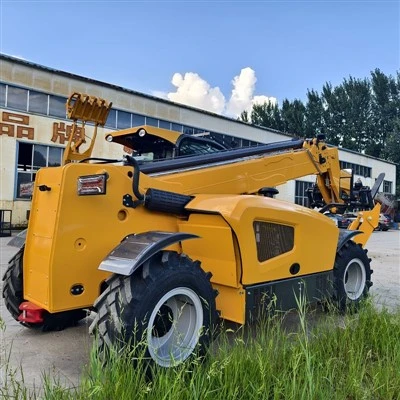
When it comes to heavy – equipment operations, especially on slopes, the stability of an excavator is of paramount importance. As an excavator supplier, I have witnessed firsthand the critical role that stability plays in ensuring both operator safety and efficient project execution. In this blog, I will delve into the stability requirements for an excavator on slopes, exploring the physical principles, design factors, and operational considerations that are essential for maintaining stability. Excavator
Physical Principles Governing Excavator Stability on Slopes
At the core of understanding excavator stability on slopes is the principle of center of gravity. The center of gravity of an object is the point at which the entire weight of the object can be considered to act. For an excavator, maintaining a stable center of gravity is crucial to prevent tipping over.
When an excavator is on a slope, the slope angle and the distribution of its weight significantly impact its stability. As the slope angle increases, the effective center of gravity of the excavator shifts towards the downhill direction. If the shift is too large, the excavator will reach a point where the center of gravity moves outside of its support base (the area defined by the tracks or wheels), leading to a tip – over.
Mathematically, the stability of an excavator on a slope can be analyzed using static equilibrium equations. The sum of the forces and moments acting on the excavator must be zero for it to remain in equilibrium. These equations take into account the weight of the excavator, the reaction forces from the ground, and the forces generated by the digging operations.
Design – Related Stability Requirements
Manufacturers play a critical role in ensuring that excavators are designed to meet the stability requirements on slopes. Here are some key design factors:
Track and Undercarriage Design
The track system is a fundamental part of an excavator’s stability. The width and length of the tracks determine the support base of the machine. A wider and longer undercarriage provides a larger support area, which helps in keeping the center of gravity within the safe limits. Additionally, the track pads are designed to provide good traction on various surfaces, including slopes. The shape and material of the track pads can be optimized to increase the frictional force between the tracks and the ground, reducing the risk of slippage.
Counterweight Design
Counterweights are used to balance the weight of the excavator’s boom, arm, and bucket during digging operations. On slopes, the proper placement and weight of the counterweight are crucial. The counterweight is typically located at the rear of the excavator to shift the overall center of gravity towards the uphill direction, compensating for the downhill shift caused by the slope.
Boom and Arm Geometry
The design of the boom and arm also affects the excavator’s stability. The length and angle of the boom and arm determine the reach and lifting capacity of the excavator. However, extending the boom and arm too far on a slope can significantly shift the center of gravity, potentially leading to instability. Manufacturers optimize the boom and arm geometry to ensure a balance between reach and stability.
Operational Considerations for Excavator Stability on Slopes
While design features are important, proper operation is equally crucial for maintaining excavator stability on slopes. Here are some key operational guidelines:
Pre – Operation Inspection
Before starting work on a slope, a thorough pre – operation inspection is necessary. Check the condition of the tracks, the hydraulic systems, and the counterweight. Ensure that all safety devices are in working order. Inspect the slope itself for any signs of instability, such as loose soil or rock, and assess the slope angle.
Slope Angle Limitation
Each excavator has a specified maximum slope angle on which it can operate safely. Operators should never exceed this limit. In general, the maximum slope angle for most excavators is around 15 – 20 degrees, but this can vary depending on the model and design. When working on slopes, use a inclinometer to accurately measure the slope angle and ensure that it is within the safe range.
Positioning on the Slope
The way an excavator is positioned on the slope is critical. It is generally recommended to position the excavator with the tracks parallel to the slope contour. This helps in maximizing the support base and reducing the risk of lateral tipping. Avoid positioning the excavator at the top or bottom of a slope where the ground may be less stable.
Digging Operations
During digging operations on slopes, operators need to be extra cautious. Avoid over – reaching or making sudden, large movements with the boom and arm. Digging uphill can be more stable than digging downhill, as it helps to keep the center of gravity towards the uphill direction. When lifting heavy loads, ensure that the load is balanced and within the excavator’s lifting capacity.
Safety Features and Technology for Improving Stability
Modern excavators are equipped with a range of safety features and technologies to enhance stability on slopes.
Stability Monitoring Systems
Many excavators now come with stability monitoring systems that use sensors to continuously measure the position and orientation of the machine. These systems can provide real – time feedback to the operator, alerting them if the excavator is approaching an unstable condition. Some advanced systems can even automatically limit the movement of the boom and arm to prevent tipping.
Automatic Leveling Systems
Automatic leveling systems are designed to keep the excavator’s cab and working components level, even on uneven slopes. These systems adjust the position of the undercarriage or the boom and arm to compensate for the slope angle, improving both stability and operator comfort.
Importance of Training and Certification
Proper training and certification are essential for excavator operators working on slopes. Training programs should cover the physical principles of stability, the operation of the specific excavator model, and safety procedures. Certified operators are more likely to understand the stability requirements and follow the proper operational guidelines, reducing the risk of accidents and equipment damage.
Conclusion
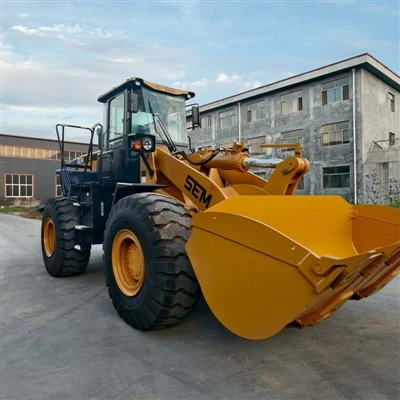
In conclusion, the stability requirements for an excavator on slopes are multifaceted, involving physical principles, design factors, operational considerations, and the use of safety features and technology. As an excavator supplier, I am committed to providing high – quality machines that are designed to meet these stability requirements.
Slip Loader If you are in the market for an excavator for slope work, our team of experts can help you select the right model based on your specific requirements. We offer a wide range of excavators with advanced stability features and are always available to provide training and support to ensure safe and efficient operation. Whether you are working on a small construction project or a large – scale mining operation, our excavators are designed to deliver optimal performance on slopes.
Contact us today to start a conversation about your excavator needs and discover how our products can enhance your productivity and safety on slopes.
References
- "Excavator Operator’s Manual" from various leading excavator manufacturers.
- "Principles of Heavy Equipment Engineering" textbooks covering machine stability theory.
- Industry – specific safety standards and guidelines from relevant construction and mining associations.
Shandong Feisite Machinery Co., Ltd.
As one of the most professional excavator manufacturers and suppliers in China, we’re featured by quality products and good service. Please rest assured to buy cheap excavator made in China here and get quotation from our factory. Customized orders are welcome.
Address: 100 meters south of Zengfusi Village, Mihe Town, Qingzhou City, Shandong Province
E-mail: Wpeng19911103@qq.com
WebSite: https://www.shandongfeisite.com/
