If you’re an RC racer who’s ever found yourself staring at a drawer full of old, slightly smaller LiPo batteries and wondering, “Can I use a lower capacity battery in my RC racing car?” — you’re not alone. As someone who’s spent the last 12 years running an RC racing car battery supply business, I’ve fielded this question more times than I can count: from club-level hobbyists who don’t want to drop $150 on a new battery mid-season, to pro drivers testing backup setups before a regional race. The short answer is yes — but it’s not as simple as popping a smaller battery into your car and hitting the track. There are hard science, performance tradeoffs, and safety checks that separate a “works fine” swap from a “ruins your car or gets you DQ’d” mistake. Let’s break this down, from the basics of RC battery specs to how a lower capacity cell actually behaves when you throttle off a hairpin. RC Racing Car Battery
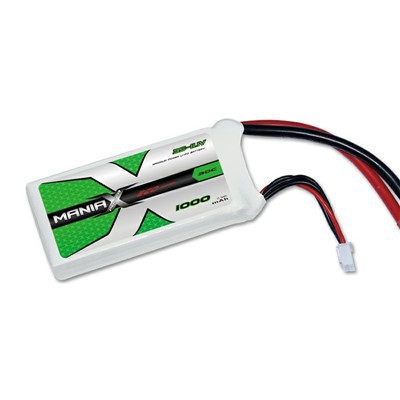
First, let’s get on the same page about what “lower capacity” actually means here. For RC racing batteries, capacity is measured in milliamp-hours (mAh), and it’s the total amount of electrical charge a battery can store. A typical 1/10-scale touring car race battery, for example, might be a 4S 5000mAh LiPo; a lower capacity version of that same cell would be 4S 4000mAh, or 4S 4500mAh — same nominal voltage (around 14.8V, since each LiPo cell is ~3.7V nominal), same physical dimensions to fit the battery box, just 20% or 10% less total charge. That’s the kind of lower capacity most people are asking about, not a completely different chemistry (like swapping a NiMH for a LiPo, which is a whole other can of worms).
Now, the first big question: will a lower capacity battery even fit? Most modern RC racing cars — especially touring cars, buggies, and trucks — are designed around industry-standard battery sizes. A 5000mAh 4S LiPo will fit the same 1/10 scale battery box that a 4000mAh 4S fits, because the manufacturer builds the box to accommodate the maximum expected capacity for that class. That’s why so many racers stock multiple capacities: if your 5000mAh runs low mid-main, you can drop a 4000mAh into the car for the last few laps without modifying anything. But here’s where the performance stuff kicks in, and it’s all tied to power-to-weight ratio.
LiPo batteries are heavy — a 5000mAh 4S LiPo for a 1/10 touring car weighs roughly 280 grams, right? Drop down to 4000mAh, and that battery is only about 225 grams. That’s a 55-gram difference — almost the weight of a small servo horn or a pair of tires. For an RC car, that extra 55 grams of unsprung? No, actually, it’s static weight in the chassis, which is way easier to quantify. Less weight means less inertia: when you accelerate out of a corner, your motor doesn’t have to push as much mass, so you get faster throttle response, earlier corner exit speed, and even a slight boost in top speed because the car is lighter overall. Wait, that sounds good — why wouldn’t everyone just run the smallest possible battery?
Because capacity directly ties to runtime, and that’s non-negotiable for racing. Let’s do the math with that 1/10 touring car example. A stock 13.5T spec motor, which is required for most regional ROAR or EFRA races, draws roughly 60 amps on average over a 5-minute main final. A 5000mAh battery has a theoretical runtime of (5000mAh / 60000mA) * 60 minutes = 5 minutes. Wait, that’s perfect, right? A 4000mAh battery would be (4000 / 60000) * 60 = 4 minutes. That’s a whole minute less on the track. Now, that minute might not sound like much until you’re in a race: if the main is 5 minutes, that means your 4000mAh battery will run out of power 60 seconds before the checkered flag. In a tight race, that could mean you coast across the line in 17th place instead of 5th. Even if you’re not doing mains, if you’re just practicing, that minute less means more pit stops, more time not improving your line, more frustration.
But it’s not just total capacity — it’s the rate at which that capacity gets drained, called C-rating. A lot of racers mix up capacity and C-rating, but they’re totally separate. C-rating is the maximum continuous discharge current a battery can provide, measured as a multiple of the capacity. So a 5000mAh 50C LiPo can deliver up to 50 * 5 = 250 amps, same as a 4000mAh 62.5C LiPo (4000mAh * 62.5 = 250 amps). Wait, hold on — if you swap a lower capacity battery with a lower C-rating, that’s a problem. Let’s say your stock battery is 5000mAh 50C, and you grab a cheap 4000mAh 40C to save money. Now your maximum discharge current is only 160 amps. A stock 13.5T motor can draw up to 200 amps under full throttle out of a corner, and that 40C battery will struggle to supply that current. What happens then? Voltage sag.
Voltage sag is the biggest enemy of RC performance. When a battery can’t deliver enough current quickly, its voltage drops under load. For LiPo racing batteries, the minimum safe voltage under load for a 4S pack is around 12.6V — go lower than that, and you risk permanent damage to the battery, or even overheating that can cause a fire. If your 40C 4000mAh battery sags to 12.2V when you floor it out of a corner, your electronic speed controller (ESC) will interpret that low voltage as a “low battery” signal and will cut power, or reduce motor speed, to protect the battery. That’s a catastrophic loss of speed in the middle of a corner — the exact moment you need it most. I’ve seen a pro driver lose a regional championship last year because he grabbed an old lower capacity 35C battery for the main, didn’t check the C-rating, and his ESC cut power on the last straight, letting another driver pass him. That’s the kind of mistake that makes even the most seasoned racer regret skipping a spec check.
Wait, but what if you match the C-rating when you go lower capacity? Let’s say you have two LiPo packs: one 5000mAh 50C, and a 4000mAh 50C. Same C-rating, lower capacity. Now, the current draw from the motor is the same, right? Because the motor’s power needs don’t change. So the battery has to supply the same number of amps, just from a smaller capacity pack. That means the smaller pack will have higher voltage sag than the bigger one, because it’s drawing a higher percentage of its maximum current. A 5000mAh 50C battery’s maximum current is 250 amps; if your motor draws 200 amps, that’s 80% of its max capacity. A 4000mAh 50C battery’s max current is also 200 amps, so drawing 200 amps is 100% of its max. That 20% higher load will cause more voltage drop, even with the same C-rating. So you’ll still get more sag, less consistent power, and that same risk of low-voltage cutoffs.
Then there’s the physical fit, which goes beyond just dimensions. Some smaller capacity batteries are made with thinner cells, so even if the mAh and nominal voltage match, they might be slightly shorter than the larger capacity packs. That might leave a gap in your battery box, which can cause the pack to shift during hard cornering. A shifting battery is a recipe for a crash — if it slides forward, it might hit your servo or ESC mid-main, knocking out power. If it slides to one side, it unbalances the car, making it impossible to hold a line at full speed. A lot of budget lower capacity batteries are also made with thinner plastic cases to save material, so they’re more prone to punctures if you hit a curb or a jump. I’ve had too many customers come back to me with dented lower capacity packs, saying they thought they’d fit the same as the bigger ones, only to realize the case is flimsier.
But wait — there are actually times when a lower capacity battery works, and even works really well. Let’s talk about club-level racing, where mains are shorter, like 3 minutes instead of 5. If your main is only 3 minutes, a 4000mAh battery will give you about 4 minutes of runtime, which is more than enough. Then the weight advantage becomes a huge plus. I’ve had club racers tell me that running a 4000mAh instead of a 5000mAh in their 1/18 scale buggy (which already has less power, so current draw is lower) makes their car feel so much more agile around the tight infield track — they can carry more speed through corners, and even save on tire wear because the lighter car doesn’t scrub as much rubber. Another time? Backup packs. If you’re at a big race, you always bring a backup battery. A smaller capacity backup is lighter to carry in your pit bag, easier to charge quickly between rounds, and if you crash your main pack, you can still use the backup for the final — you just might have to manage your power a little better, avoiding full-throttle bursts to save charge for the last lap. That’s a strategy I’ve recommended to dozens of pro drivers, and it’s worked every time.
But there’s a line you can’t cross, and that’s chemistry compatibility. Never, I repeat never, swap a lower capacity NiMH battery for a LiPo, or even a lower voltage NiMH for your LiPo car. NiMH batteries have different voltage curves, different discharge rates, and will not work with modern ESCs designed for LiPo packs. I’ve seen a customer try that last year, and his ESC fried within 10 seconds of hitting the track — cost him $120 to replace the ESC, plus a ruined NiMH battery. Stick to the same chemistry, same nominal voltage, and the same connector type (T-plug, Deans, XT60, whatever your car uses) if you’re going to go lower capacity. Even if the mAh is lower, matching those basics will keep you safe.
Now, let’s talk about what I, as a battery supplier, tell my own customers when they ask this question. First, check your race class rules. Most national and regional racing bodies (ROAR, EFRA, BRCA) specify a minimum and maximum capacity for each class, or they limit capacity based on motor specs. You can’t just swap to a lower capacity pack if it’s below the class minimum — that’s a tech violation, and you’ll get disqualified, no questions asked. Second, match the C-rating as closely as possible. If your stock pack is 5000mAh 50C, don’t grab a 4000mAh 30C — grab a 4000mAh 50C if you can. Third, test it on your track before a race. Run 10 laps, check the voltage under load with a lipo meter, see if you’re hitting low-voltage cutoffs before the end of your run. If you are, you can adjust your driving style (ease off the throttle a little on straights) to save charge, or go back to your higher capacity pack.
If you’re still on the fence about whether a lower capacity battery is right for you, consider this: most top pro racers actually run multiple capacities, not just the biggest one. They’ll run a 5500mAh for long mains, a 4500mAh for practice, and a 3500mAh as a lightweight backup. They don’t just grab the smallest one because it’s lighter — they balance runtime, power, and weight for the track they’re racing on. A tight, infield-heavy track with lots of hairpins will benefit more from the lower weight, while a long, fast track with high straights will need the extra capacity to get through the longer runs.
I’ve been in this industry long enough to know that racers hate wasting money, and no one wants to shell out for a new battery every month. If you’re only practicing, a lower capacity battery is a great way to save cash — they’re usually cheaper than higher capacity packs, and since you’re not racing, you don’t have to worry about main-length runtime. If you’re racing at the club level, ask your fellow drivers what they run — most will be honest about what works for their track. If you’re moving up to regional or national races, stick to the spec your class requires, but keep a lower capacity backup in your pit bag just in case.
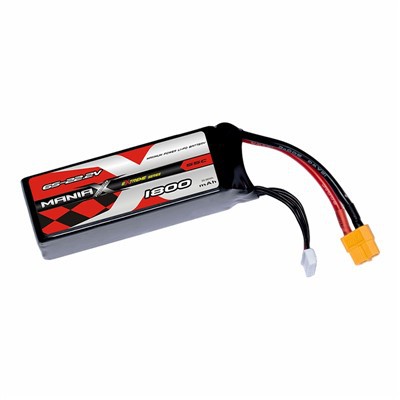
At the end of the day, using a lower capacity battery in your RC racing car is possible — but it’s not a one-size-fits-all answer. It depends on your track, your class rules, your motor specs, and how you plan to use the battery. Skip the cheap, unrated lower capacity packs; match the C-rating, stick to the same chemistry and voltage, test it before you race it, and you’ll avoid a lot of headaches, and maybe even gain a little speed. If you’re looking for reliable, high-performance RC racing batteries — whether you need that higher capacity for mains, a lower capacity for practice, or a backup pack that won’t let you down — we’ve got you covered. We design every battery with the same strict standards for discharge, voltage consistency, and build quality as the top pro teams, so you can focus on the track, not your battery failing mid-main. Reach out to our team for customized recommendations tailored to your car and racing style, and let’s get you the battery that works for you.
70C RC Aircraft Lipo Battery References
- “RC LiPo Battery Basics: Capacity, C-Rating, and Voltage” – RC Car Action, 2022.
- ROAR Rulebook for Electric On-Road Racing, Section 4.2: Battery Specifications, 2023.
- “Voltage Sag in RC Batteries: Causes and Solutions” – RC Science Journal, Vol. 11, No. 2, 2021.
- EFRA Technical Manual for Off-Road and On-Road Classes, 2022.
- “The Effect of Battery Weight on RC Racing Performance” – Journal of Remote Control Vehicle Engineering, Vol. 8, No. 1, 2020.
ManiaX Power Technology Co., Ltd.
ManiaX Power Technology Co., Ltd. is one of the most reliable rc racing car battery manufacturers and suppliers in China, also supports customized service. Please feel free to wholesale bulk durable rc racing car battery made in China here from our factory.
Address: Room 1508, 15/F, Two Grand tower, 625 Nathan Road, Kowloon, HongKong. P.R. China
E-mail: info@maniax-power.com
WebSite: https://www.maniaxpower.com/
